
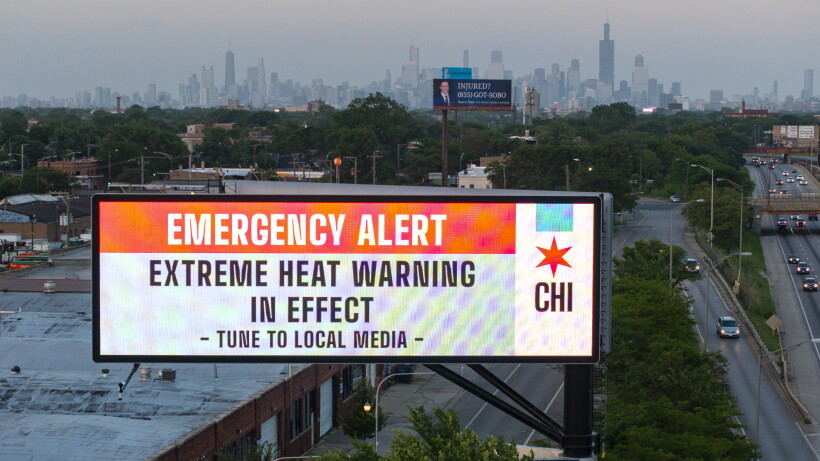
An Evanston man is among six Cook County residents who died of heat-related causes in July, making it the county's deadliest month for heat deaths since at least 2015.
Daniel Machnikowski, 69, died Wednesday, July 1, at his Evanston home of heart disease, with heat stress listed as a contributing factor, according to the Cook County Medical Examiner's Office. His death came on the final day of the summer's first extreme heat warning, when the National Weather Service reported peak heat indices reaching 105 degrees.
The City of Evanston had opened cooling centers at five locations during that heat wave: Robert Crown Community Center, Fleetwood Jourdain Community Center, Levy Senior Center, Prieto Community Center, and Evanston Public Library. The city opened the same centers again during a second heat wave the week of Tuesday, July 14. No city official has publicly addressed Machnikowski's death.
County toll
The six July deaths represent the highest monthly heat toll in Cook County since at least 2015, according to a joint analysis by WBEZ and the Chicago Sun-Times published Monday, July 21. The previous worst was July 2019, when five people died, according to medical examiner data cited by the Chicago Tribune.
The other five victims were all residents of Chicago's South and West sides:
- Victor Ferguson, 48, died Thursday, July 2, of heat stroke with ethanol intoxication as a secondary cause.
- Barbara Whigham, 71, of Englewood, died Friday, July 3, of hypertensive cardiovascular disease complicated by heat stress, asthma, and obesity.
- Mike Rodriguez, 57, of McKinley Park, died Friday, July 3, of cardiovascular disease with heat stress and diabetes as contributing factors.
- David Gonzalez, 44, of Chicago Lawn, died Saturday, July 4, of heat stroke complicated by hypertension, diabetes, and obesity.
- Stephanie Rodriguez, 45, of Greater Grand Crossing, died Thursday, July 9, from complications of heat stroke, with schizophrenia listed as a contributing factor.
Four of the six victims were younger than 60. High temperatures ranged from 88 to 95 degrees on the days each person died or was hospitalized, according to the WBEZ/Sun-Times analysis.
"Of all the things that we deal with in medicine, heat-related deaths should be almost completely preventable," Dr. Sadiya Khan, a cardiologist at Northwestern Medicine's Bluhm Cardiovascular Institute, told the Chicago Tribune. "We should be monitoring this and then making sure that that's not something that recurs."
The Chicago Department of Public Health reported the city of Chicago averaged three heat-related deaths per year from 2020 to 2024. July's countywide toll of six in a single month already doubles that city average, and the county figure includes deaths outside Chicago's limits.
Dr. Howard Ehrman, a former Chicago assistant health commissioner and co-founder of the People's Response Network, told the Tribune the true count is likely higher because heat exacerbates existing conditions that are usually listed as the immediate cause of death.