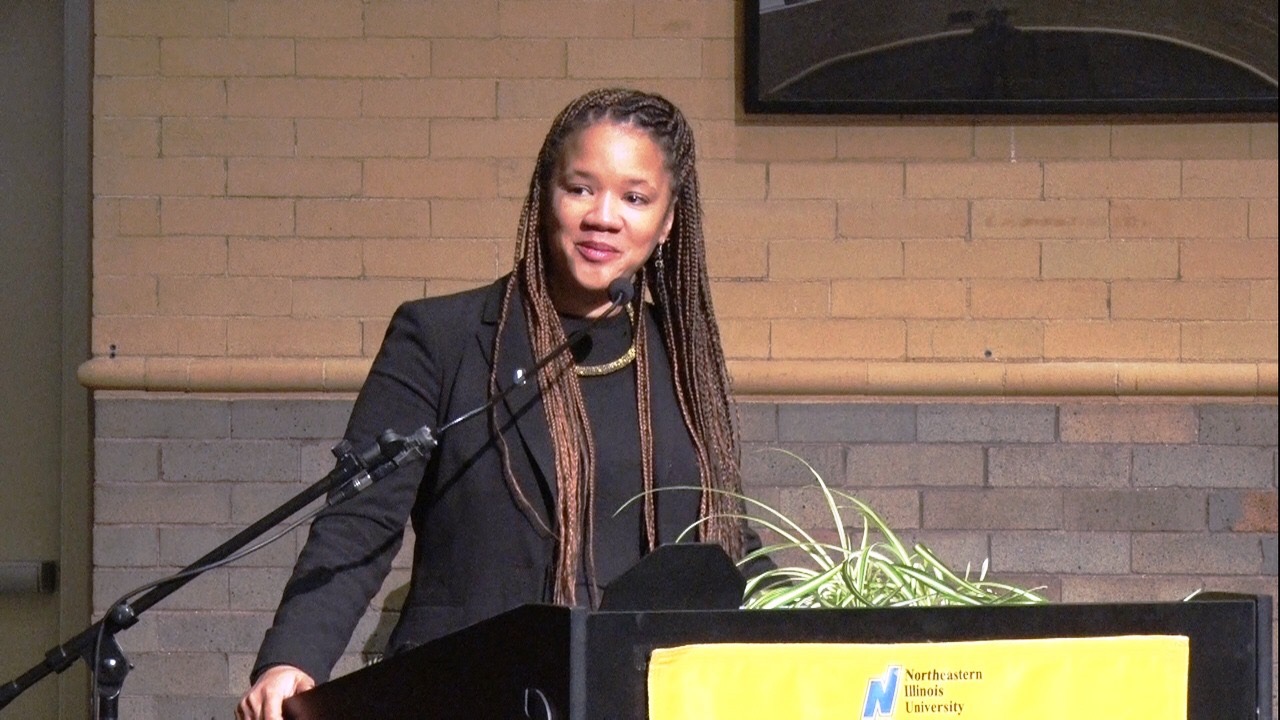
Robin Rue Simmons is helping communities across the country develop local reparations initiatives as the Trump administration challenges Evanston’s pioneering program in federal court. Her nonprofit, FirstRepair, says it has supported more than 100 communities pursuing local reparations efforts.
Rue Simmons, chair of Evanston’s Reparations Committee and a former city councilwoman, helped establish the nation’s first government-funded reparations program for Black Americans. Its benefits include $25,000 in housing assistance or cash payments for qualifying Black residents and descendants of Black residents who lived in Evanston between 1919 and 1969. She told the Associated Press she sees federal redress as a long-term goal despite the current political climate.
"Under this administration, of course, there are many barriers to achieving that, but we still stand on federal redress as our collective north star," Rue Simmons said.
The expansion effort runs headlong into a federal lawsuit. The U.S. Department of Justice received a federal judge's permission in October to intervene in Flinn v. City of Evanston, a case originally filed in 2024 by Judicial Watch, a conservative legal organization, on behalf of six non-Black former residents. The DOJ alleges the city's program violates the equal protection clause of the 14th Amendment and the Fair Housing Act.
In an Oct. 16 court filing, DOJ attorneys sought civil penalties against the city and monetary damages for people they say were excluded from the program because of race, according to Evanston Now.
Kiersten Pels, a Justice Department spokeswoman, said in a statement to the AP that "race-based government benefit programs are both unconstitutional and often violate federal civil rights laws."
Michael Bekesha, an attorney representing the original plaintiffs, said the Evanston program distributes funds based on race without specific harm identification, according to the AP. He called it unlike historical reparations programs.
Evanston is fighting back. At an Oct. 29 court hearing, Precious S. Jacobs, an attorney at Jenner & Block representing the city, said Evanston plans to file a motion to dismiss the DOJ's complaint, Evanston Now reported. That motion had not been filed as of Oct. 29. The city has pledged to defend the program.
The Evanston City Council approved the Local Reparations Restorative Housing Program in March 2021. It is funded by the city's cannabis tax revenue, with the council committing the first $10 million from that tax to reparations for housing and economic development, according to the city's resolution. Eligible recipients can use the $25,000 for down payments, home improvements or mortgage assistance.
A July 2 city staff report listed 301 reparations recipients and a total estimated disbursement amount of approximately $7.33 million.
Joe Martin, a 46-year-old Evanston reparations recipient who works as a Delta flight attendant, told the AP he was pleasantly surprised by the program. He said the nation's history has been to ignore Black Americans' contributions to building the country and the terror they endured.
"We all know the history, 40 acres and a mule didn't go down the way it was supposed to," Martin said, adding that someone establishes a legitimate program and "the government's like, naw."
U.S. District Judge John Kness, who is overseeing the case, has not yet filed a full written explanation for allowing the DOJ to intervene. At an earlier October hearing, he said the government's argument to join the case was stronger than the city's argument against it.