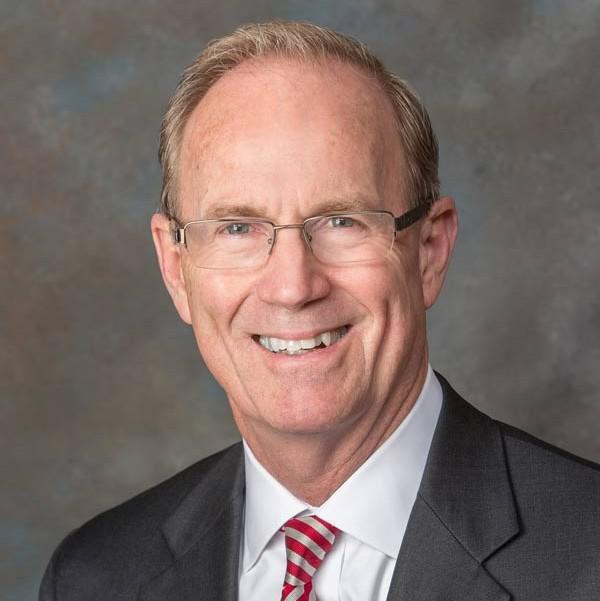
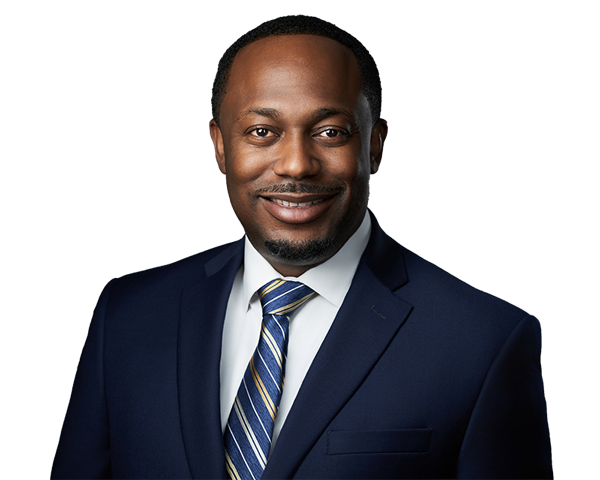
Whitfield Harrington Jr. is running for U.S. Senate in Illinois in the Nov. 3 general election. He is certified for the ballot under the American Center Party. Don Tracy (Republican) and Juliana Stratton (Democratic) are also running.
Asked why he is running, Harrington said in our candidate questionnaire: "Washington is broken and both parties helped break it. Illinois families are paying more for everything and getting less. I am running as an independent to govern from the center, not the extremes, and to help build the American Center Party."
Candidate information
Party affiliation: Harrington said in our questionnaire: "I am an independent. I am running as an independent candidate for the United States Senate in Illinois while helping to form the American Center Party, a new party dedicated to practical, center-focused leadership."
Family: Harrington said: "I was born and raised in Belzoni, Mississippi, in the heart of the Mississippi Delta, the 20th of 21 children. … My father was a pastor and a carpenter who also cut hair, farmed, and drove a school bus to feed 21 children. He chaired the Humphreys County NAACP for seven years, taking the post after the first chairman was assassinated and the second was shot."
Education: Harrington holds a bachelor's degree in political science from Delta State University, according to BallotReady.
Occupation: Harrington said: "I serve as a pastor in Chicago, a ministry that reaches people across states, countries, and continents. Before that I worked in the financial industry, inside banks and insurance companies. I later ran my own insurance practice, where I sat on the other side of the desk from families trying to protect what little they had."
Prior office: Harrington said: "I have never held elected or appointed public office." He said his only experience in an elected role came in 1997, "when the American Legion's Boys State program elected me Governor of Mississippi Boys State."
On the issues
Cost of living (top priority): Harrington said in our questionnaire: "The single most important issue is the cost of living." He said: "I would introduce a Family Affordability Act as my first bill. It would require banks to make small-dollar mortgages available for homes under $100,000 with the commission rolled into the loan, ban excessive speculation in energy markets so that anyone buying a barrel can take delivery of it, end tariffs on food, and make the first year of community college free. It would be paid for by reprioritizing existing federal spending, including recovering the billions lost to fraud each year, not by raising taxes on working families."
Health care: Harrington said: "I support Direct Primary Care, where you pay your doctor a low monthly fee, sometimes as little as $100 for an individual or $300 for a family, for unlimited visits with no insurance middleman and no surprise bills." He said his plan "forgives student loans for doctors who open Direct Primary Care clinics in underserved communities, urban and rural, and provides grants and low-interest operating capital to help them open and stay open."
Federal spending and debt: Harrington said: "I would redirect ten to twenty percent of the defense budget, on a two-year cycle, into rebuilding our own infrastructure, bases, roads, bridges, rails, the power grid, and strategic stockpiles." He said he would "create a Cabinet-level anti-fraud department" to recover what he described as "the estimated $233 billion to $521 billion lost to fraud every year."
Immigration: Harrington said: "Secure the border with whatever each sector needs, meaning manpower, technology, and physical barriers where they work. Deport criminals. End family separations. … Make legal immigration easier than illegal entry, because today the opposite is true."
National security: Harrington said: "No American troops should deploy without a clear mission, a clear cost, and a clear exit plan voted on by Congress." He said allies in Europe and the region "should carry the stronger voice and the heavier share of their own defense."
Candidate responses were collected through the Evanston Wire candidate questionnaire and the candidate's campaign website. All policy positions and biographical claims are attributed to the candidate.