A stalled bill in Springfield would allow self-driving cars to be tested on Cook County roads, including in Evanston. The legislation would link autonomous vehicles to public transit as part of a pilot program.
State Rep. Kam Buckner, D-Chicago, introduced House Bill 4663 to create the Autonomous Vehicle Pilot Project Act, as first reported by Capitol News Illinois. The bill would restrict testing to counties with more than one million residents, as well as Sangamon County and the Metro East region of Madison, St. Clair and Monroe counties. Cook County, where Evanston sits, meets that population threshold.
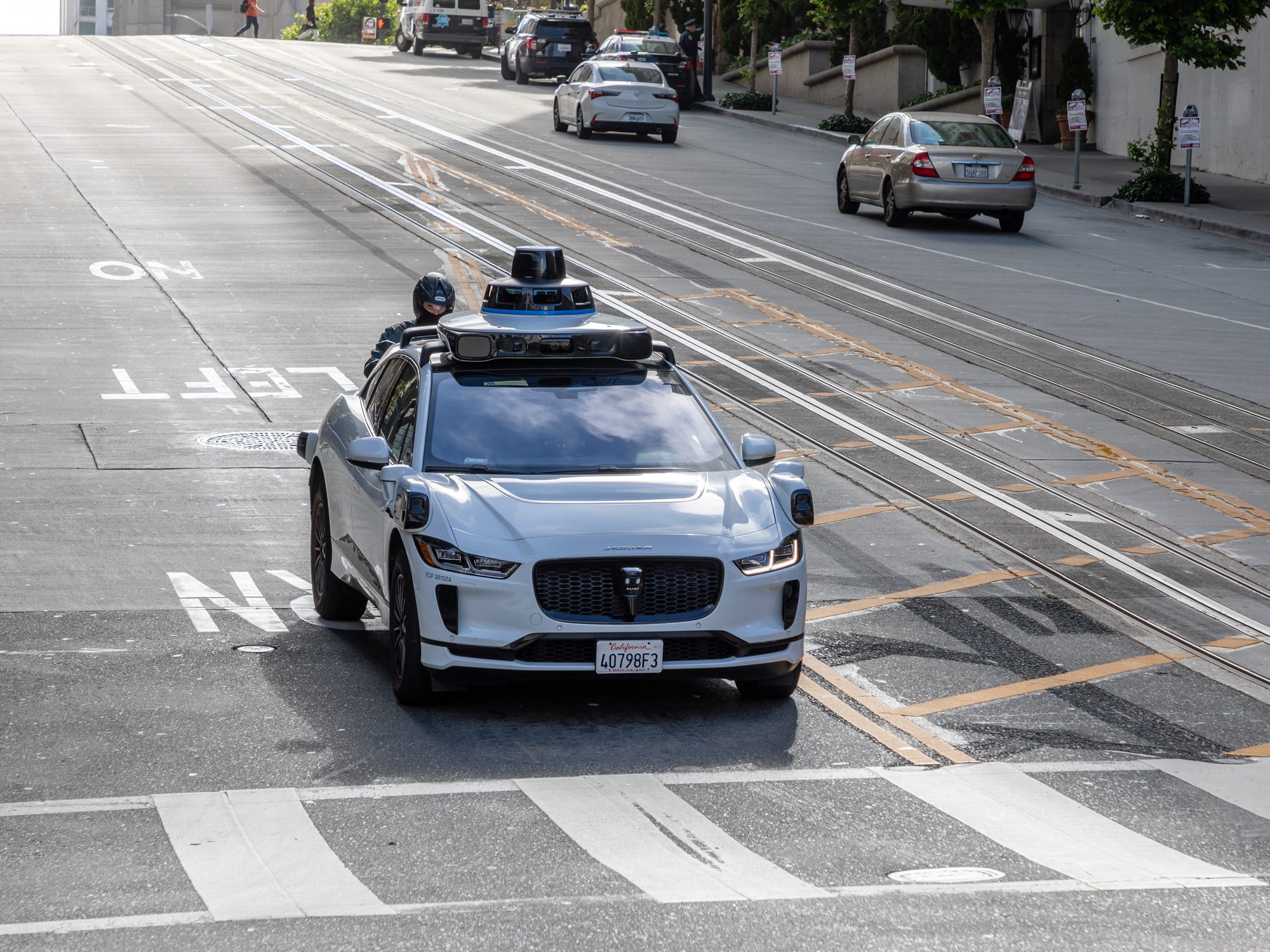
Driverless autonomous vehicles, or AVs, are not authorized in Illinois. Robotaxis already operate in San Francisco, Phoenix and Austin, Texas.
The bill would not put AVs on streets right away. Buckner said he envisions a controlled data-gathering phase.
"What we're asking for is a very controlled program with a certain number of cars on the road," Buckner said, according to Capitol News Illinois.
Buckner has also urged the Northern Illinois Transit Authority (NITA), the new agency overseeing the CTA, Metra and Pace, to study how AVs could connect to existing transit. He pointed to the "first- and last-mile problem," where the nearest train or bus stop is far from riders' homes.
The bill has stalled. According to General Assembly records, HB 4663 was re-referred to the House Rules Committee on March 27. It still needs to clear that committee, pass a substantive committee, win a full House vote and repeat the process in the Senate.
The Illinois General Assembly's veto session is scheduled for Nov. 17-19 and Dec. 1-3. Buckner said he hopes the bill could advance then but is not rushing it.
Opposition from multiple fronts
Jim Merrell, advocacy director with the Active Transportation Alliance in Chicago, said the bill preempts local authority in some ways, meaning state law would override local regulations. Merrell said cities need the ability to control where AVs operate so they do not interfere with bus stops or bike lanes.
The Alliance pointed to a competing bill, House Bill 4789, which would create an Automated Driving Systems Development Act with a review committee within the Illinois Department of Transportation (IDOT). That bill is also stalled in the House Rules Committee.
Labor unions have pushed back too. Service Employees International Union Local 1 opposes the bill over job concerns. Bailey Koch-Farwana, a union spokesperson, said the union's economic analysis found that each AV on the road replaces four human drivers because the vehicles can operate around the clock.
Koch-Farwana said the bill lacks worker protections and that labor unions and rideshare drivers have not been invited into the legislative conversation.
Dany Robles, senior legislative director at the Illinois Environmental Council, said AVs at high-congestion points could worsen traffic and pollution. Robles also noted concerns about job losses in the driving industry.
What it means for Evanston
The bill does not name Evanston specifically. The local connection comes from Cook County's inclusion in the pilot zone. If HB 4663 passes and AVs are eventually deployed, Evanston residents could see driverless vehicles connecting riders to CTA and Metra stations.
NITA, which replaced the Regional Transportation Authority on Sept. 1, held its first board meeting on Sept. 10, the Chicago Tribune reported. Board chair Tom Kotarac said the new agency could create a system "where a rider can seamlessly move from a train to a bus to a shared bike or scooter and maybe someday, even a robotaxi or an autonomous vehicle."
Whether NITA has responded to Buckner's request to study AV integration is unclear from available records.
HB 4663 would sunset on Jan. 1, 2029, according to the bill's text. The next chance for legislative action is the November veto session.