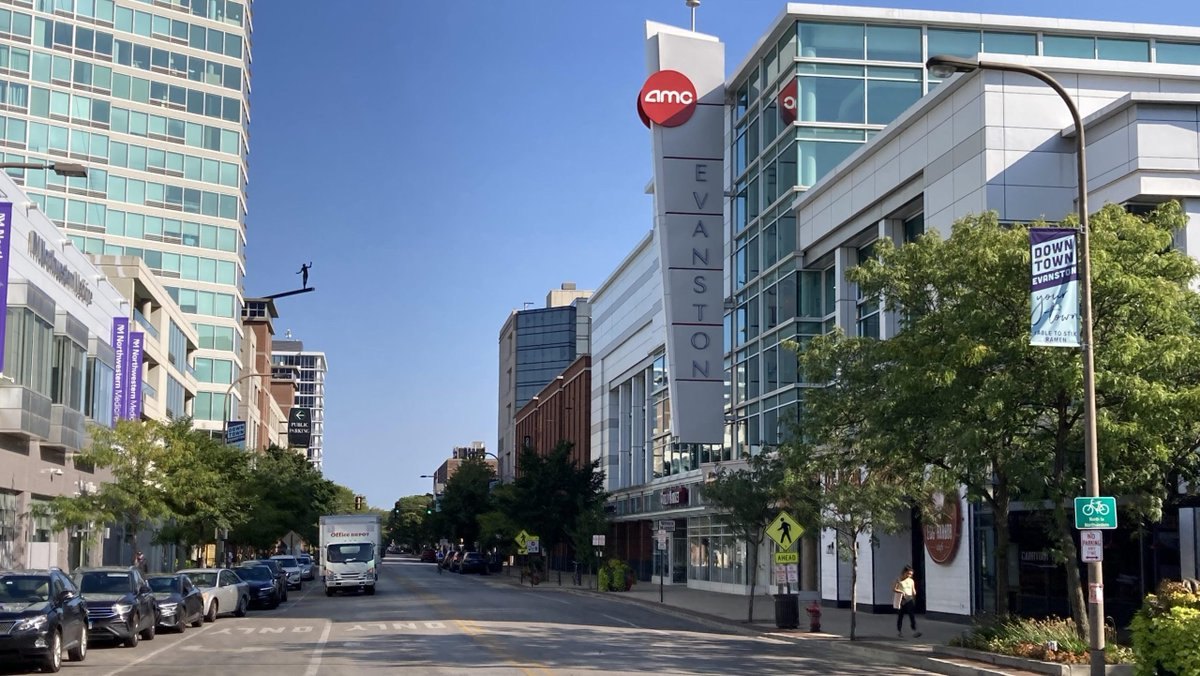

The fiber-optic cable running from Northwestern University's Evanston campus to downtown Chicago just became the test bed for a first-of-its-kind quantum networking experiment.
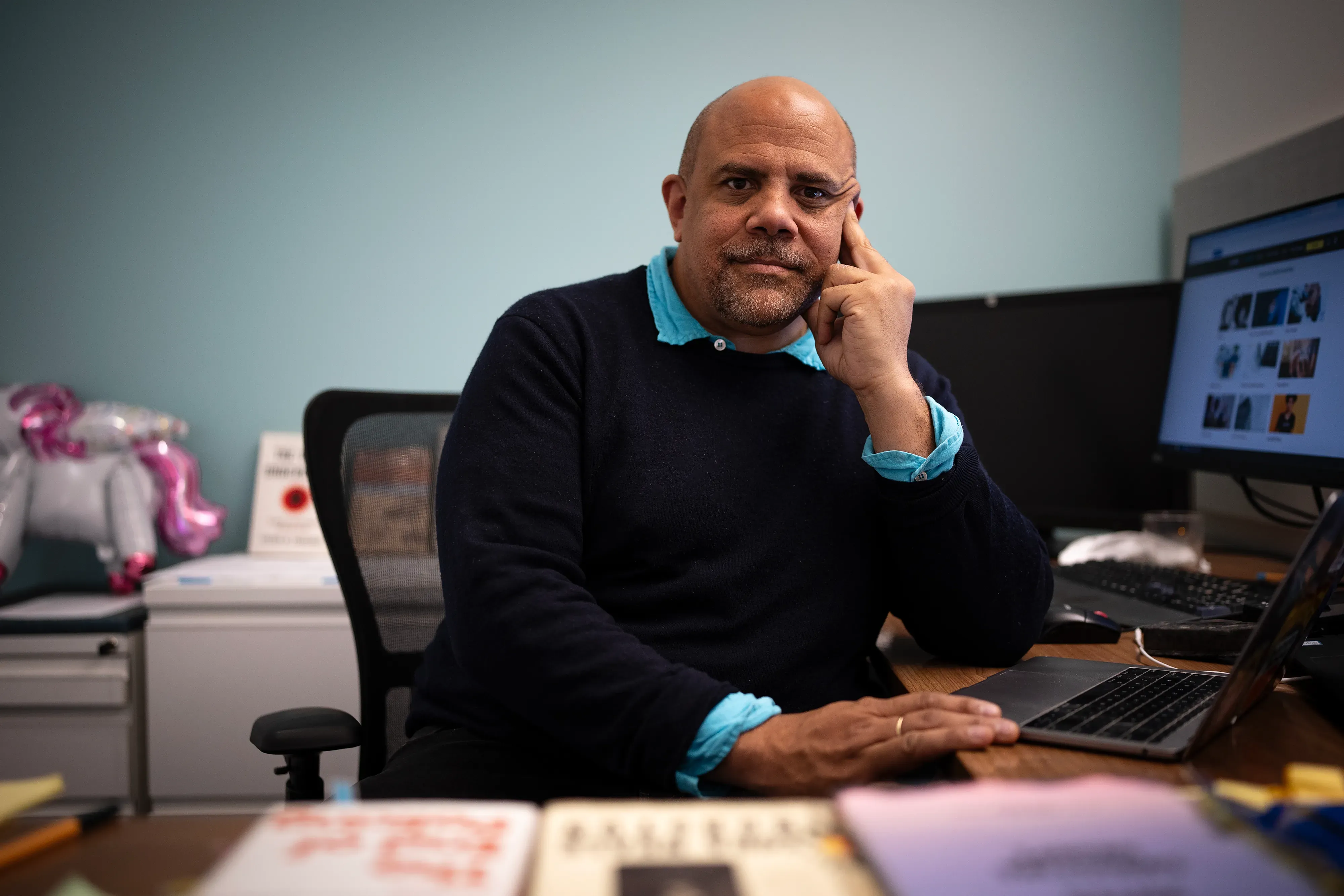
Researchers led by Prem Kumar, a professor of electrical and computer engineering at Northwestern's McCormick School of Engineering, sent entangled photons through a 24.4-kilometer cable connecting Evanston to the StarLight International/National Communications Exchange Facility on Northwestern's Chicago campus. The cable was simultaneously carrying high-capacity internet traffic. The quantum signals preserved their entanglement with more than 94% fidelity, according to the study published Monday, July 21, in the journal Optica Quantum.
It is the first time scientists have distributed quantum entanglement between remote locations over a fiber carrying modern commercial-level telecommunications traffic, the university said.
"Quantum signals are very, very tiny compared to classical signals," Kumar said. "It's like an ant traveling through a path filled with elephants. Our results show that photons can survive the journey and remain entangled."
The practical upshot: future quantum networks may not require entirely new infrastructure. They could ride on cables already in the ground, including the ones connecting Evanston to Chicago.
How it worked
Kumar generated pairs of entangled photons in his lab on the Evanston campus. One photon from each pair stayed in Evanston; its partner traveled the full 24.4 kilometers to Chicago. The photons shared the fiber with two 800-gigabit-per-second data channels and enough additional optical power to represent a fully loaded commercial link. The fiber carried enough power to potentially transmit 36 terabits per second of classical data, equivalent to roughly 20 million YouTube videos streaming at once, according to the university.
To keep the fragile quantum photons from being overwhelmed, the team shifted them into a quieter slice of the optical spectrum called the O-band, while conventional traffic stayed in the C-band where commercial systems operate. An optical timing system called White Rabbit kept both ends synchronized to within trillionths of a second, allowing researchers to identify matching entangled pairs in real time.
Gina Talcott, a graduate student in Kumar's research group, is the study's first author. The U.S. Department of Energy funded the work through Fermilab.
From the lab to the real world
The experiment builds on a December 2024 study, also led by Kumar, that demonstrated quantum teleportation over a 30-kilometer fiber carrying internet traffic. That earlier work took place entirely in a laboratory. The new study used installed infrastructure between two physical locations.
"In that experiment, we showed the art of the possible," Kumar said of the 2024 work. "We achieved actual quantum teleportation over 30 kilometers, but it was in the lab. We wanted to add more realism and bring the experiment into the real world."
Broader context
The Chicago region was designated a U.S. Regional Innovation and Technology Hub for quantum technologies by the White House in October 2023, a status that opens the door to federal funding. In April 2026, IBM announced 750 new technology jobs at the Illinois Quantum and Microelectronics Park on Chicago's South Side, backed by a $500 million state commitment to develop the facility.
Northwestern's Center for Photonic Communication and Computing, which Kumar directs, and its spinoff company NuCrypt are part of the regional quantum ecosystem.
The team's next goal is to perform quantum teleportation between remote nodes across a real-world telecommunications network carrying commercial traffic, though no timeline for that demonstration has been announced.