Dr. Borna Bonakdarpour is a behavioral neurologist. He's also a classically trained pianist. And during the COVID-19 pandemic, when his patients with dementia were cut off from the world, he combined those two roles into something new.
The result is the Musical Museum, a live concert and lecture series run by Northwestern University's Music and Medicine Program for people with mild to moderate neurocognitive disorders and their caregivers. A study published Monday, July 20, in the journal Frontiers in Neurology provides evidence for what Bonakdarpour and his co-creator, violist Clara Takarabe, hoped to show: based on participant surveys, the program improves attendees' mood, intellectual stimulation, and social connection.
"It's common for individuals with dementia to isolate because they might feel nervous or embarrassed, especially if their language has declined, so this is a great way to get them out, and it's a nice opportunity to see them outside the clinical setting," Bonakdarpour said in a Northwestern University statement accompanying the study.
How it works
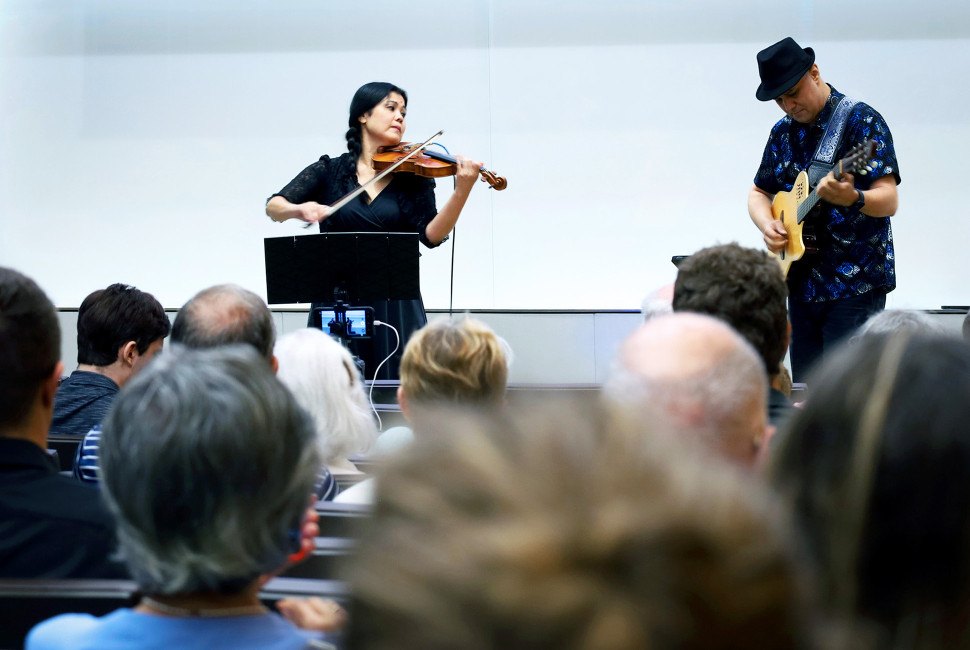
Each Musical Museum session runs one hour. Bonakdarpour and other musicians perform live, weaving in verbal introductions that give historical and musical context to each piece. Sessions are built around themes connecting philosophical ideas like love, loss, and time with culturally significant periods for older adults, particularly the 1960s and 1970s.
The music itself is a mix. Some pieces are familiar, drawn from what would have been popular during attendees' adolescence. Research in the field has linked that kind of music to improved autobiographical memory and reduced agitation in dementia patients. Other selections are unfamiliar but tonal, often rooted in folk traditions from different regions of the world.
Receptions after each concert give attendees a chance to talk with one another, a social opportunity that's often limited for people living with cognitive decline.
The program is run through Northwestern's Feinberg School of Medicine in Chicago.
What the study found
Participants in the study attended 11 sessions spanning bossa nova, jazz, baroque, and other genres. Through post-session surveys, they reported high satisfaction and improved mood. One participant described the program as "a wonderful opportunity to expand our contacts with individuals undergoing similar experiences," according to the published paper.
The series draws an average of 50 attendees per event, according to Northwestern.
Bonakdarpour, an associate professor at Northwestern's Feinberg School of Medicine, said music remains accessible to dementia patients long after other cognitive abilities decline. He said the program aims to keep participants' brains engaged through that connection.
How to participate
The Musical Museum is open to the community. No upcoming event dates are listed on the program's website, but those interested in attending future sessions can email [email protected] for information.