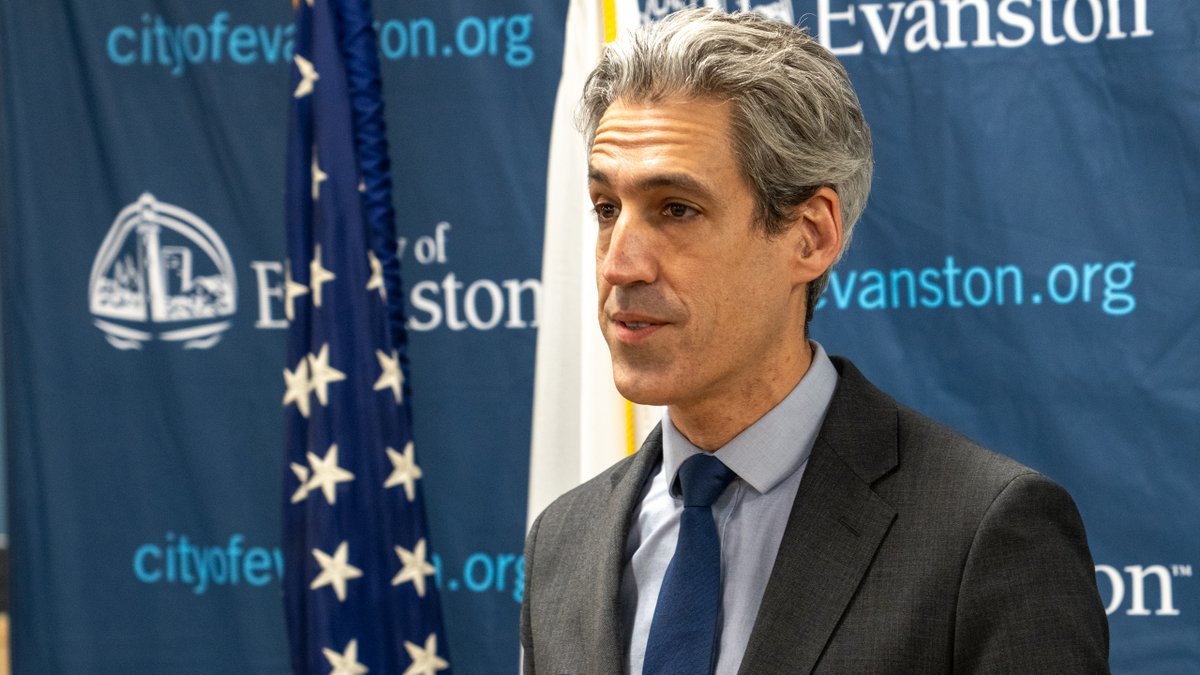
Evanston Mayor Daniel Biss took the city's reparations fight to a national audience Friday, June 19, appearing on CNN to argue the program is legally sound and morally necessary, two days after the U.S. Department of Justice moved to block it.
"When you incur a debt, you ought to repay that debt," Biss told CNN, framing the Local Reparations Restorative Housing Program as a response to decades of documented city actions that created racial disparities in housing.
The mayor also published a Substack essay the same day titled "On Reparations and Trump's attacks," laying out an extended defense of the program.
City's legal posture
Biss's public push followed a written statement he issued after the DOJ filed its motion to intervene Wednesday, June 17, in the existing Judicial Watch lawsuit, Flinn et al. v. City of Evanston. In that statement, reported by the Chicago Tribune, Biss said the city "stand[s] behind our first-in-the-nation reparations program, are confident in its constitutionality, and look forward to defending it in court."
The DOJ argues the program violates the Equal Protection Clause of the 14th Amendment and the Fair Housing Act by using race as an eligibility requirement. Assistant Attorney General Harmeet K. Dhillon, head of the DOJ Civil Rights Division, called the payments "race discrimination, pure and simple," according to Patch.
U.S. District Judge John F. Kness denied Evanston's motion to dismiss the underlying Judicial Watch suit in March 2026, allowing the case to proceed. Under a proposed briefing schedule, the city has until Monday, July 20 to respond to the DOJ's motion. The federal government's reply is due Monday, August 3, with a court hearing set for Thursday, August 6.
Payments continue
Robin Rue Simmons, chairperson of the Evanston Reparations Committee, told the Chicago Tribune the city will continue disbursing reparations while the suit moves through the courts. The committee announced in February that 44 additional descendants will receive $25,000 payments by year's end.
The program has distributed over $7 million in $25,000 increments, according to WTTW reporting from June 17, funded by a 3% Cannabis Retailers Occupation Tax and a real estate transfer tax. The city has pledged $20 million overall.
Community voices split
Not all residents are unified behind the program's design. Meleika Gardner, a 3rd Ward resident, told the Tribune she opposes the DOJ lawsuit but also has concerns about how the program tracks and distributes funds, saying public trust requires "transparency, accountability, and the ability for residents to clearly understand how funds are collected, tracked, and distributed."
Kenneth Wideman, 80, one of the first 16 recipients in 2023, used his $25,000 for rent and housing maintenance. Darlene Cannon, a 2nd Ward resident still on the waiting list with a lottery number in the three hundreds, called the system "kind of flawed" because some elders with lower numbers remain unpaid.
The next court deadline falls July 20, when the city must file its formal response to the DOJ.