The U.S. Department of Justice argued Tuesday, Aug. 4, that it has an "unconditional right to intervene" in the lawsuit challenging Evanston's first-of-its-kind reparations program, setting up a federal judge's decision that could add the full weight of the government to the case.
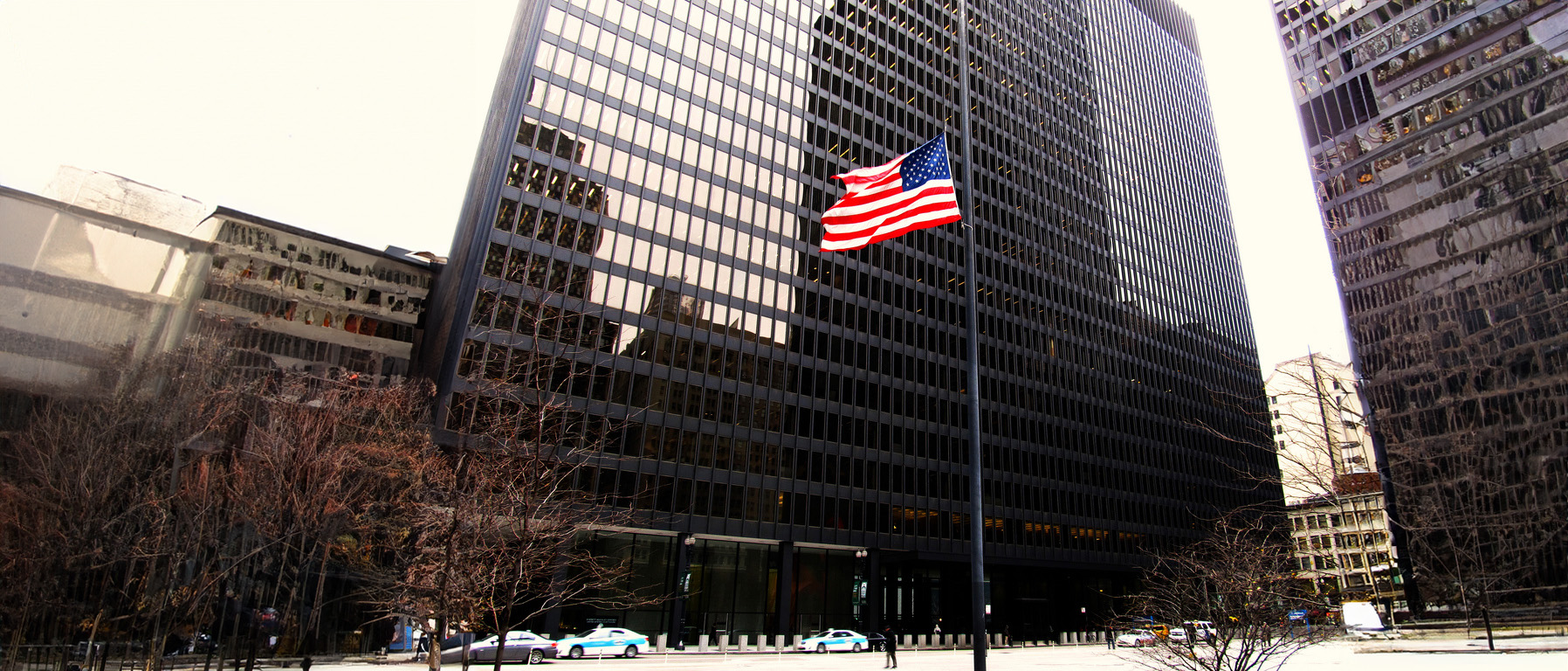
U.S. District Judge John Kness, presiding at the Dirksen Federal Courthouse in Chicago, will now decide whether federal prosecutors can formally join Flinn, et al. v. City of Evanston as a party. City attorneys pushed back, arguing the Justice Department waited too long to intervene, according to Evanston Now.
If Kness grants the motion, the DOJ would join the original private plaintiffs, significantly escalating the legal threat to the nation's first government-funded municipal reparations initiative.
The legal challenge
The underlying class-action lawsuit was filed in May 2024 by descendants of people who lived in Evanston between 1919 and 1969 but were not Black. They argue the program's use of race as an eligibility requirement violates the Fourteenth Amendment's Equal Protection Clause.
A federal court denied the city's motion to dismiss in March 2026. That same month, the DOJ opened its own investigation into the program under the Equal Protection Clause and the Fair Housing Act. The city refused to cooperate with that investigation, according to DOJ filings.
The DOJ's Civil Rights Division first moved to intervene on June 16. In a statement issued June 17, Assistant Attorney General Harmeet K. Dhillon called the program "race discrimination, pure and simple," saying that "simply handing out money based on race" is illegal. U.S. Attorney Andrew S. Boutros, whose office covers the Northern District of Illinois, said the program "establishes the very hierarchy the Equal Protection Clause was designed to dismantle."
The program so far
Evanston's Local Reparations Restorative Housing Program, approved by the City Council in 2021, provides $25,000 payments to Black residents and their direct descendants who faced housing discrimination between 1919 and 1969. The money can go toward home repairs, down payments, mortgage assistance or direct cash, funded by a local tax on legal marijuana sales.
The total program budget is $20 million.
As of June 2026, the city had distributed more than $7 million to over 200 recipients, according to WTTW. About 14% of Evanston's roughly 76,000 residents are Black.
City's response
Mayor Daniel Biss has signaled the city intends to fight. On June 21, Biss wrote on X: "In Evanston, we have put in years of thoughtful work to address a legacy of discrimination. We going to fight for our city in court and stop Trump from rolling back the clock."
On July 2, Biss posted again:
@danielbiss: "There is nothing radical about telling the truth about our history—and trying to make things right. That's the work Evanston began, and we won't let that progress be dismantled."
Robin Rue Simmons, the former alderwoman who pioneered the program and now leads the nonprofit First Repair, said in June that "Evanston has set a new precedent. It has shown that racial reparations are possible."
The Evanston Reparations Committee addressed the federal intervention bid at its meeting on Friday, July 3.
What's next
No ruling date from Judge Kness has been announced. The case is 24-cv-4269 in the U.S. District Court for the Northern District of Illinois.